

 |
|
 |
|
| Dr.
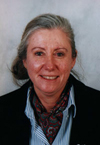
Marianne Odlyha. Birkbeck College, London, UK Manager of the University of London Service in Thermal Methods since 1988. Originally trained as a solid state chemist, she specialised in pigment and binding medium characterisation at the Doerner Institute, Munich, Germany and was employed at the Courtauld Institute of Art in London (1988/89). Research has resulted in over 60 publications in refereed journals, book chapters and lectures at international thermoanalytical meetings and EU Advanced Study Course on Deterioration of Collagen-based historical Materials. She has been involved in three other EU projects: Contractor in SCICULT Scientific Analysis of Cultural Objects, Coordinator of ERA Environmental Research for Art Conservation and sub-contractor Microanalysis of Parchment. |
|
 |
|
| Dr.
Franco de Santis. Consiglio Nazionale delle Ricerche - Istituto Inquinamento
Atmosférico, Rome, Italy Education: Franco De Santis graduated cum laude in Chemistry from the
Rome University in 1971.After having worked as a research analytical chemist
at the R&D of a leading chemical Company based in Milan, he joined
(Sept. 1982) the Institute for Atmospheric Pollution of the National Research
Council (IIA - CNR) of Italy. |
|
 |
|
| Dr. José
Antonio Ruiz Hernando. Alcázar de Segovia, Spain Graduated in History at the Universidad Complutense de Madrid in 1968 and received a Doctorate in History from the same university in 1980. Lecturer at the Escuela Técnica Superior de Arquitectura de Madrid (Higher Techical School of Architecture) since 1968 and holds a Chair in History of Art and Architecture there since 1987. Member of the Provincial Board for Fine arts in Segovia, Full Academician of the Real Academia de Historia y Arte de San Quirce, Affiliated Academician of the Real Academia de Bellas Artes de San Fernando, Madrid and Curator of the Alcazar de Segovia since 1990. Has a series of publications & books on art and architecture of Segovia - notably a book on the Romanesque Art of Segovia, the definitive work on the Cathedral of Segovia, etc. Took part in the ERA project, helping with placement of sensors and historical background. |
|
 |
|
| Linda
Bullock, National Trust. London, United Kingdom Obtained a BSc in Physics and Chemistry from Sussex University in England. Worked 5 years at Kodak's Research Laboratories in the UK and then 7 years in the Scientific Department at the National Gallery in London, together with Garry Thompson, specializing in aspects of the museum environment and measurement of colour change in paintings. She then worked for 2 years at the Central Laboratory for the Netherlands Museums in Amsterdam and later joined the Historic Buildings department of the National Trust, where she advises on all aspects of environmental monitoring, both in historic buildings and at archaeological sites. Included in her role is that of training and organising research projects in environmental monitoring and control and dissemination of information about conservation. |
|
 |
|
| Dr.
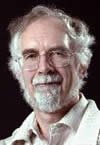
Tim Padfield. National Museum of Denmark Conservation scientist at the National Museum of Denmark, his main interest is the microclimate around museum objects and the microclimate within historic buildings that house these objects. He has carried out extensive studies of physical and biological damage caused to buildings by climatic stress and has offered innovatory solutions using porous, absorbent materials to avoid the effects of condensation and act as natural ventilators, absorbing many pollutants. His ideas are a challenge to modern architects and engineers, who are used to building in entirely non-absorbent materials such as glass, steel, titanium sheet and dense concrete. |
|
 |
|
| Dr
Jaap Boon. FOM, Amsterdam, Holland +++ |